


The report presented at Mipcom highlights that Spanish fiction releases grew from 40 to 73 annually between 2021 and 2025, an increase of 83%, while underscoring the role of Spanish platforms such as Atresplayer and Movistar Plus+.
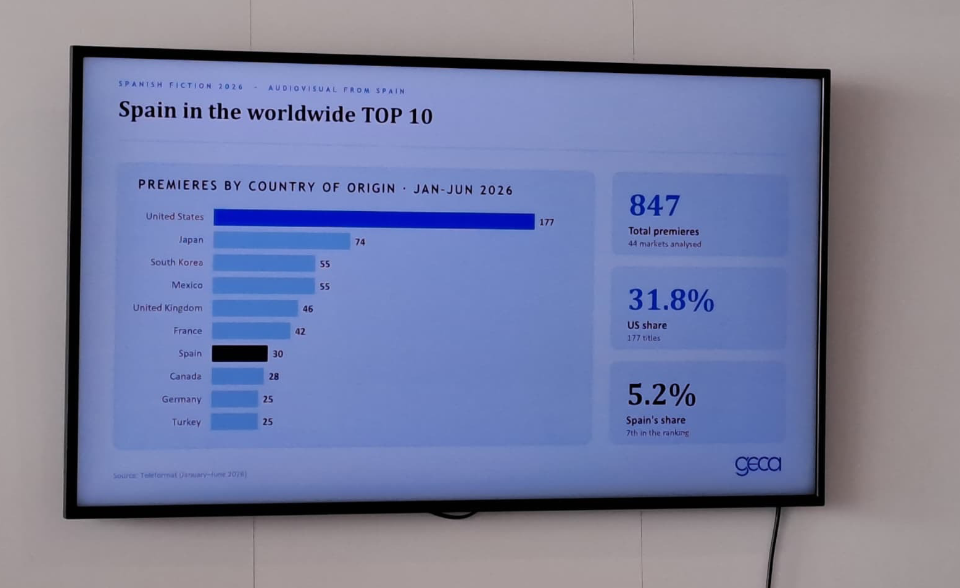
Spanish fiction is strengthening its presence in the international market. Spain ranks seventh worldwide in the volume of scripted series premieres among 44 markets analyzed, according to the report Spanish Fiction 2026: Between New Narratives and New Seasons, produced by GECA for ICEX and presented on Tuesday, October 13, at Mipcom Cannes.
The study analyzes the period from January to July 2026 and includes projections through the end of the year. It places Spain behind the United States, Japan, South Korea, Mexico, the United Kingdom and France. It also highlights sustained growth in domestic production, the prominence of thrillers and a balance between new stories and established intellectual properties.
The presentation, held at ICEX’s space within the MIP Creative Hub, was led by Gloria Saló, GECA’s Director of Production and Content Consulting, and marked the start of the Audiovisual from Spain activities program at the market.
More Premieres and a Stronger Presence for Spanish Platforms
Between 2021 and 2025, Spanish fiction releases increased from 40 to 73 annually, representing growth of 83%. During the first six months of 2026, 30 series and nine new seasons premiered, while four daily dramas stood out for their strong audience traction: Sueños de libertad, La Promesa, Valle Salvaje and Com si fos ahir.
The report also highlights competition among streaming platforms. During the first half of 2026, Atresplayer and Movistar Plus+ each recorded four premieres, matching Netflix and Prime Video in this category.
In terms of genres, thrillers and romantic stories remain prominent in both drama and comedy, the latter being the leading genre in global viewing. According to GECA’s analysis, Spanish production combines thematic diversity with offerings aimed at both broad audiences and specific market segments.
Spanish fiction is also engaging with several of the major thematic trends shaping the international market in 2026, from soccer and youth to LGBTQ+ diversity, education, religion and identity.
Among the titles identified in the report are Por cien millones and Salvador, which explore soccer-related themes; Una novia por vacaciones, which addresses LGBTQ+ stories; and Yo siempre a veces, Tamara Ta Mata and Oasis, which focus on younger audiences. Meanwhile, Barrio Esperanza offers a new narrative approach to education.
This diversity reflects the Spanish industry’s ability to address issues that are part of the global conversation and translate them into audiovisual productions with the potential to connect with different audiences.
Original IP and Adaptations
Of the 30 premieres recorded during the first half of the year, 16 were original series, including Barrio Esperanza, Millennial mal, Argi Gorriak and Oasis. The remaining titles came from different sources: seven were literary adaptations, three were based on true events, another three belonged to established franchises, and one was derived from a film.
Literary adaptations remain an important avenue for developing new productions based on established intellectual properties. Examples cited in the study include La nena, by Carmen Mola; Ella maldita alma, by Manuel Rivas; El libro negro de las horas, by Eva García Sáenz de Urturi; and Esa noche, by Gillian McAllister.
Meanwhile, series consisting of six to eight episodes, with runtimes ranging from 30 to 50 minutes, are consolidating their position as a premium format across genres.
International co-productions round out this landscape as a tool for collaboration and international expansion, particularly in Europe. During the first half of the year, the report identified Spanish projects produced in collaboration with Portugal and Belgium, including Millennial mal and Ravalear.
Outlook for the Second Half of the Year
GECA forecasts another 24 premieres between July and December 2026: 20 original series, three new seasons and one production belonging to an established franchise.
This schedule is complemented by 30 titles that have yet to receive a premiere date or remain in production, as well as 16 series that have been renewed for new seasons during the 2026–2027 cycle.
The volume of projects underway points to continued production activity and reinforces the importance of combining new intellectual properties with established franchises and formats to sustain Spanish fiction’s presence in the global market.