
The Live Comeback: Sports Are Taking Back Power in the Age of Infinite Content
Scripted content is facing its own challenge: rising costs and algorithm fatigue. In the age of endless content, live sports have become the scarcest asset in the media ecosystem, driving urgency, real-time shared viewing, and instant social conversation.
-
By Rosa Fuentes
- 28/04/2026

Scripted content is running into a new reality: there’s more of it than ever, it’s easier to replicate, and it’s increasingly shaped by algorithms built to predict individual tastes. In that shifting landscape, live sports are regaining serious commercial momentum.
What makes live sports different is that it delivers what no other content vertical can offer all at once: can’t-miss urgency, massive simultaneous audiences, instant social buzz, and the kind of focused attention that only happens around a one-time, live event.
Then there’s FOMO—the fear of missing out—which keeps fans locked in and watching in real time. Add the post-pandemic explosion of viewing platforms and rapid tech advances making broadcasts more immersive, interactive, and data-rich, and live sports are becoming an even bigger powerhouse in the media game.
Receipts: The Wins You Can't Ignore
The numbers back it up across every market. In December 2024, the NFL went exclusive on Netflix for two Christmas Day games — and the results were staggering. Per Nielsen, the doubleheader drew roughly 65 million viewers in the US, making both matchups the most-watched NFL games in streaming history. Netflix came back for seconds in Christmas 2025, and promptly broke its own record: the Lions-Vikings game averaged 27.5 million viewers, peaking above 30 million.
Across the Atlantic, the 2024-25 UEFA Champions League season on Prime Video in the UK and Ireland became the most-watched sports season in the platform’s European history.
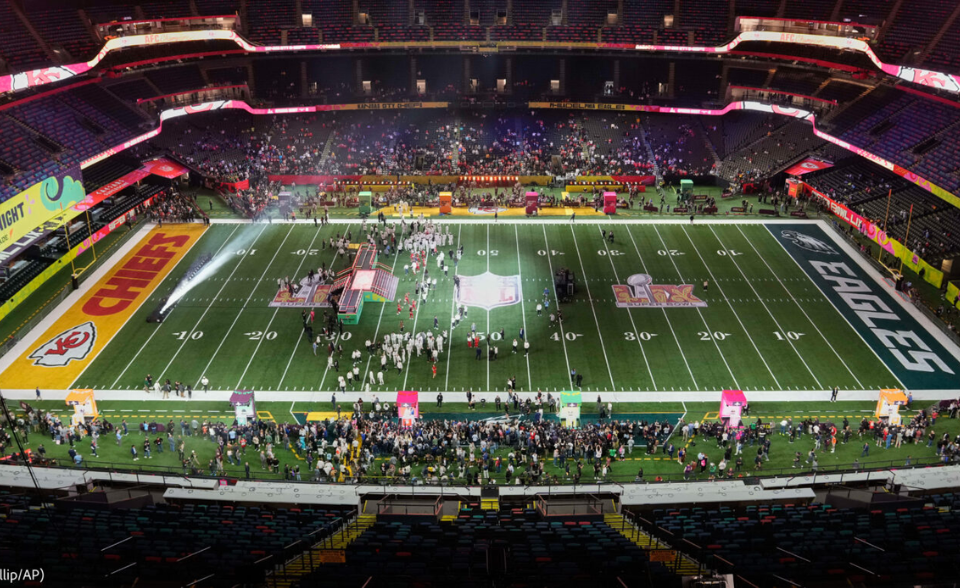
And live sports don’t just break audience records — they rewrite the advertising playbook. Super Bowl LIX in February 2025 averaged 127.7 million viewers per Nielsen, making it the most-watched single-network broadcast in American television history. A 30-second spot broke the $8 million barrier for the first time, with total ad spend hitting $650 million.
The throughline is the same everywhere: live sports doesn’t compete for attention — it commands it.
World Cup 2026: The Question Was Never About Tech
Heading into the 2026 FIFA World Cup, Latin America is shaping up to be the clearest test case for this transformation. According to the latest report from Dataxis, 21 companies across the region’s six biggest markets hold broadcast rights tied to the tournament, and 76% are betting on streaming—either through exclusive digital plays or hybrid models that combine OTT, pay TV, and free-to-air television.
For years, the industry debated whether digital platforms could truly support massive live broadcasts at scale without crashing. That question has largely been answered—and 2022 FIFA World Cup made it clear.

The Foundation Behind the Boom
Before looking ahead to the OTT future, it’s worth looking at the foundation. According to data presented by Fernando Roca, Insights Director at Warner Bros. Discovery Southern Cone, at Jornadas Internacionales, live match viewership grew 35% from one FIFA World Cup to the next, while the number of people watching football across the region has doubled over the past five years.
And that growth still rests on a clear foundation: pay TV remains the leading platform for football viewing, while free-to-air television has steadily lost ground.
Brazil: The Case Study That's Making Traditional Broadcasters Sweat
Brazil is the clearest read on where this business is heading — and the most uncomfortable one for legacy players.
Dataxis lays it out in hard numbers: during Qatar 2022, CazéTV, in partnership with YouTube, hit 6.9 million simultaneous sessions during the Brazil-Croatia match — a digital streaming record for the region. Today the channel boasts 25.9 million subscribers and has announced advertising deals worth $400 million for the upcoming World Cup.
Now stack that against Grupo Globo, Brazil’s historic media heavyweight. Globo is going into 2026 with a full multiplatform play — free-to-air, pay TV and its OTT Globoplay — reaching a potential audience of 197 million people, including 30 million on Globoplay alone. Their projected revenue from the tournament? Also around $400 million.
Two radically different models. One bottom line. That’s not a coincidence — that’s a regime change.
The Regional Map: From Broadcast to Hybrid Ecosystem
Brazil is the most advanced version of a shift that’s playing out across all of Ibero-America.
In South America, DirecTV holds full rights to all 104 matches across DirecTV and DGO, while free-to-air broadcasters retain partial windows. In Mexico, TelevisaUnivision’s ViX is positioning itself as the only destination for all 104 games in full digital format via ViX Premium. And in April, Disney+ entered the picture with a rights package covering Argentina, Colombia, Ecuador, Uruguay, Chile, Peru, and Venezuela through Disney+ Premium with ESPN.
The result is a more fragmented rights architecture — but also a more sophisticated one. Less single-screen dependency, broader multiplatform distribution and new monetization layers that extend well beyond the match itself.

The Broadcast Is the Platform Now
The biggest shift isn’t about who owns the rights, it’s about what they do with them. Live sports are opening the door to entirely new revenue plays: real-time targeted advertising, AI-generated highlights, second-screen experiences, synchronized brand activations, integrated commerce, and -most importantly- rich user data and personalization at scale.
The Real Battle for the 2026 FIFA World Cup
As we head toward kickoff, the biggest competition across Ibero-America won’t simply be over who holds the rights, it’ll be over who can turn that massive wave of audience attention into a sustainable business that extends far beyond the final whistle.
And the market is more nuanced than the usual OTT-vs.-broadcast storyline. Pay TV remains the leading home for football in the region, audiences have been growing at double-digit rates for years, and digital players aren’t replacing a mature market—they’re stepping into one that’s still expanding fast. That changes the whole game