


In the following interview with ttvnews, Carlos Quintanilla, VP & Head of Content and Production, Latam/USH at SPT Latam, discusses the company’s regional strategy of developing locally-rooted stories that can connect with audiences worldwide, the international potential of titles such as Rosario Tijeras and Carlota, and the evolving opportunities across the audiovisual landscape.
A true global powerhouse, with content that’s present all over the world, Sony Pictures Television sees in the Latin American and US Hispanic markets an opportunity to develop stories that are deeply rooted in local cultures, while reaching audiences far beyond their place of origin.
That strategy is reflected in titles such as Rosario Tijeras, a “deeply Mexican” story which in turn delves into themes that are fully universal; or Carlota, an ambitious new production with roots in Latin America, but the potential to travel worldwide.
As explained by Carlos Quintanilla, VP & Head of Content and Production, Latam/USH at Sony Pictures Television Latin America, the strongest international stories are not those designed to be universal from the outset, but those that combine cultural specificity, extraordinary characters and emotions that audiences can recognize anywhere.
In the following interview with ttvnews, the executive talks about SPT’s current production strategy for the region, the importance of developing relatable stories, his outlook on the new trends and evolution of the audiovisual industry, and his predictions for what’s to come for the Latin American market.
What are Sony Pictures Television’s current priorities for the Latin American and the US Hispanic markets?
Our priority today is very clear: to develop stories with a strong local identity, but with the ambition and potential to connect with much broader audiences.
I think that has evolved over the past few years. In the past, we might have started by thinking about a specific market or distribution window. Today, from a content perspective, we think about the entire life of a story: where it originates, which audiences it can reach, how it can travel and, most importantly, how it can build a long-term relationship with viewers.
Rosario Tijeras is a great example. It is a deeply Mexican and Latin American story, but the themes it explores, power, survival, love, family and loyalty, are universal. We recently premiered the fifth season with great success, and we are already shooting season six. Reaching that point demonstrates something very important to us: when a story truly connects, it can become much more than a series. It can become a franchise that builds a lasting relationship with its audience.

Carlota
At the same time, we continue to invest in new and ambitious projects. Carlota, which is currently in post-production represents another important part of our strategy: raising the scale and ambition of our productions and finding stories that are rooted in our region and our culture but have the potential to resonate internationally.
What types of stories do you think have the greatest potential to travel in today’s landscape?
Paradoxically, I think the stories that travel best are the ones that don’t set out to be universal from the beginning. They are stories with a very specific identity, extraordinary characters and genuine, recognizable emotions. I think there is tremendous curiosity today for worlds that feel authentic.
Rosario Tijeras is again a great example. It has a very distinctive world, but its protagonist and her emotional conflicts are relatable in any territory.
And Carlota presents a different kind of opportunity. It is a production built around extraordinary characters, events and a remarkable historical world, but with a contemporary perspective. We don’t want to make history that audiences simply observe from a distance; we want them to enter that world and experience it.
For me, that is the ideal combination: cultural specificity, universal emotion and execution that can compete on any screen in the world.
How have development and production changed for SPT following the expansion of streaming?
I think we have entered a much more disciplined phase and, in many ways, a healthier one for the business. It is no longer about producing more simply for the sake of producing more. Every project has to justify why it should exist, who it is for and what makes it different.
That requires us to be much more rigorous from the development stage. The concept, characters, talent, budget, production model and potential audience all need to be aligned long before we get to the set.
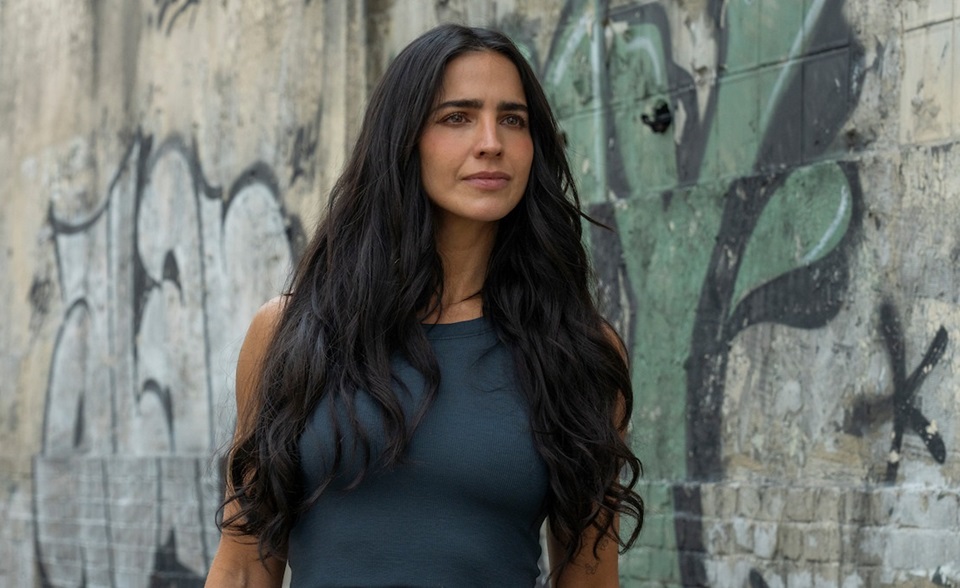
Rosario Tijeras
The conversation with our partners has changed as well. Today, it is not enough to present a good idea. We need to present a complete vision for the project, including how it can be positioned, what the right scale is and what potential it has to grow beyond a first season.
In a more selective market, being able to demonstrate that we can build properties that sustain and renew their audiences over time has tremendous value.
How has SPT adapted its strategy to new trends, such as digital miniseries, vertical content, and new consumption habits?
For us, it is essential to understand that audiences are not only changing what they watch; they are changing where, when and how they watch it.
Younger generations move seamlessly between television, streaming, YouTube, TikTok and other platforms. They don’t necessarily make the same distinctions between different types of content that our industry has traditionally made.
We are experimenting with an expansion of our storytelling language and our ability to reach new audiences. It is also an extraordinary space for learning. It allows us to understand new approaches to storytelling, duration, pacing, talent and engagement.
What do you think is next for the international audiovisual industry?
Focusing on the industry in Latin America, I think we are going to see several things happening at the same time. On one hand, there may be less indiscriminate volume and greater focus on truly distinctive properties. On the other, we may see much greater coexistence between long-form, short-form, digital and vertical content, alongside new forms of distribution.
I also believe that franchises and creating worlds and characters that audiences want to maintain a relationship with over many years will become increasingly important.