
From Episode to Universe: How Successful Children’s Brands Are Built Today
The evolution of children's entertainment confirms that the episode is no longer the center of the business. What truly matters now is the ability to build worlds where children can stay, explore, and identify themselves.
-
By Rosa Fuentes
- 20/02/2026

For decades, success in kids content was measured by the number of episodes produced, TV ratings, and presence on broadcast channels. Today, that logic is obsolete. In an ecosystem dominated by digital platforms, apps, immersive experiences, and global communities, the strongest children’s brands are no longer built as simple TV series, but as multi-platform narrative universes.
This paradigm shift is especially visible in Latin America and the US Hispanic market, where projects rooted in a clear cultural identity have expanded beyond the traditional screen to become internationally recognized franchises. The phenomenon confirms a core industry trend: the future of children’s entertainment lies in creating continuous experiences, not just isolated content.
Within the framework of the Kidscreen Summit, these models have become key references for producers, distributors, and platforms seeking to understand how to connect with an increasingly fragmented and digitalized audience.
From Content to Ecosystem: A New Brand Model
Today’s young audience does not distinguish between television, YouTube, games, or apps. For so-called Generation Alpha, entertainment is an integrated experience: watching, playing, singing, interacting, and sharing are all part of the same universe.
Successful brands respond to this logic with three fundamental pillars: multi-platform by design (they are not created for just one channel), educational and emotional purpose (they connect with families, not only with children), and community building (they generate bonds, not passive consumption).
In this context, several cases from Latin America and the US Hispanic market clearly illustrate this transformation.
Plim Plim: From Educational Series to Global Franchise
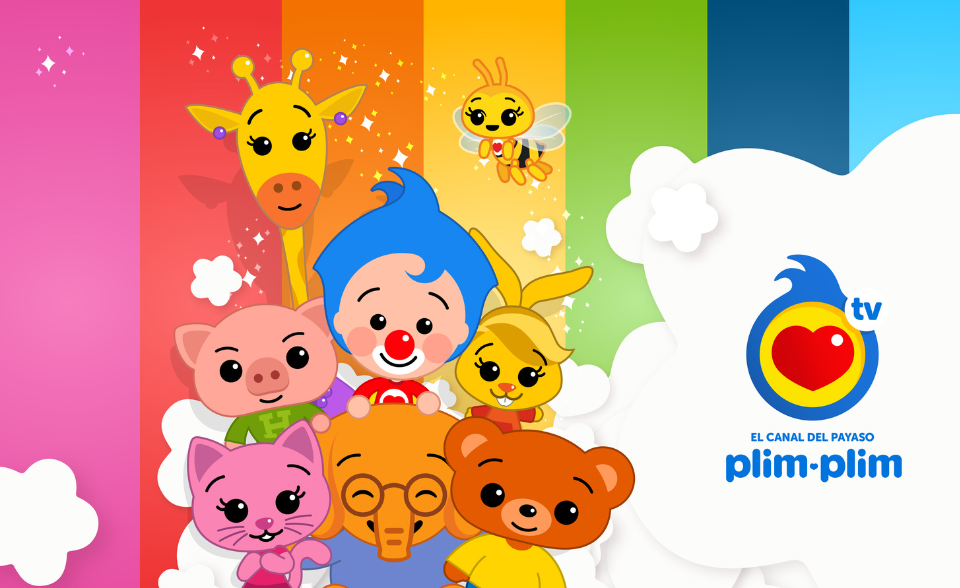
One of the most compelling examples is Plim Plim, a project that began as an educational musical series and evolved into a comprehensive entertainment ecosystem for preschoolers.
Far from limiting itself to television, the brand expanded its narrative across YouTube, streaming platforms, educational apps, books, licensed products, and live shows. This trajectory demonstrates how an IP can grow when its narrative universe is built on clear values: empathy, healthy habits, friendship, and learning.
The Plim Plim phenomenon is explained by its ability to combine entertainment with formative content, something highly valued by parents and educators. Its international expansion confirms that a brand born in Latin America can compete in the global market if it builds a strong and coherent identity.
More than a character, Plim Plim has become an emotional and social learning environment — a space where children do not simply consume episodes but interact with a recognizable and consistent world.
El Reino Infantil: When YouTube Is the Starting Point
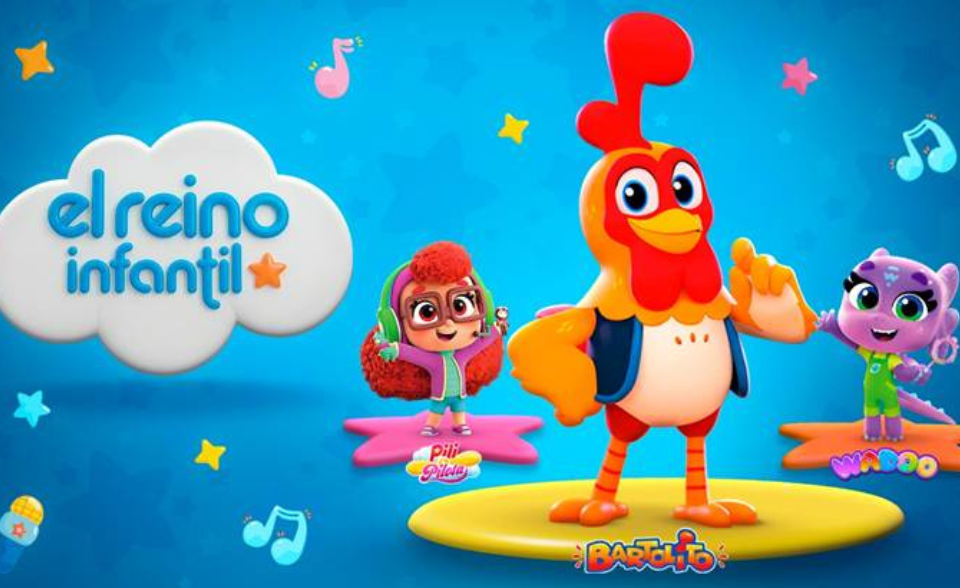
Another paradigmatic case is El Reino Infantil, a brand that proves that a digital origin is not a limitation, but a strategic advantage.
Born on YouTube, this project became one of the largest Spanish-language children’s content phenomena worldwide. Its formula combines music, easily recognizable characters, narrative repetition, and a strong emotional connection with its audience.
Over time, the brand expanded into television, FAST channels, OTT platforms, and commercial licensing, building an ecosystem that goes far beyond video on demand. El Reino Infantil shows how algorithms can become the starting point of a franchise when supported by a clear brand strategy.
This model reveals a key lesson for the industry: success no longer depends solely on broadcaster deals, but on the ability to build loyal digital communities that follow content as it evolves into new formats.
Dora the Explorer: A Model That Anticipated the Future
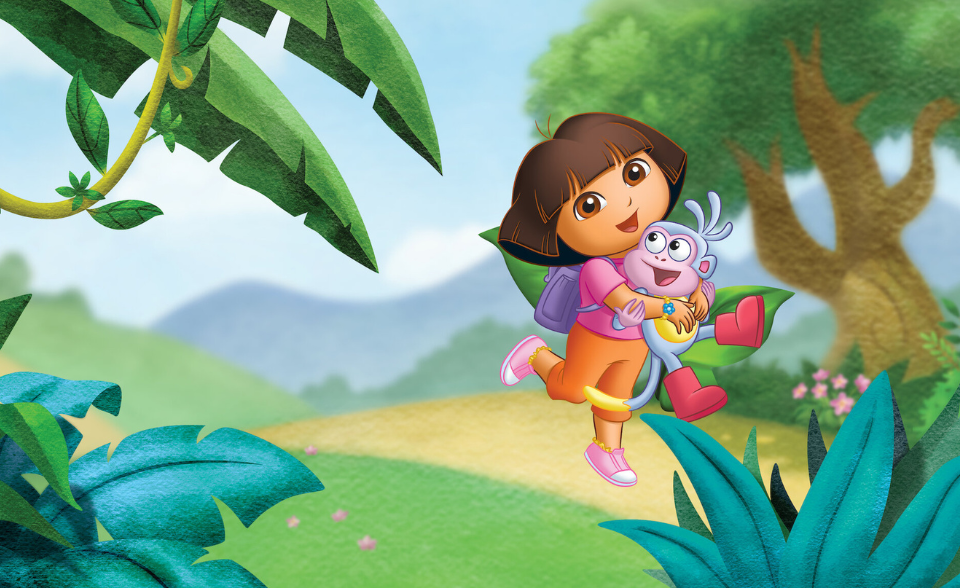
Long before the term “transmedia universe” became common, Dora the Explorer was already offering an interactive and multicultural experience. Its blend of adventure, learning, and bilingualism made it one of the most influential children’s IPs of the past decades.
Dora was not just a series; it was a brand that expanded into movies, products, music, theme parks, and more recently, new digital platforms. Its longevity proves that when an IP is built with a clear identity, it can adapt to multiple generations and formats.
This case anticipated today’s market logic: characters that speak directly to their audience, consistent narrative universes, and continuous expansion beyond the original screen.
A New Business Model
This transformation also reshapes monetization. In the past, the business path was linear: series, channel, advertising. Today, the model is circular: IP, universe, multiple revenue streams. These include digital platforms, licensed products, educational apps, live experiences, family events, retail, and publishing.
This diversified approach reduces dependence on a single distribution window and strengthens brand sustainability. In an environment where competition for attention is fierce, the brands that endure are those that understand that children do not just watch stories — they inhabit worlds.
The evolution from episode to universe is not a passing trend. It represents a structural shift in how children’s entertainment is conceived, produced, and commercialized. For Latin America and the U.S. Hispanic market, it also signals a moment of opportunity: culturally rooted stories, when transformed into narrative ecosystems, can become global brands.
In today’s children’s industry, success is no longer measured by how many episodes are produced, but by how deeply a universe is built — and how long children want to stay inside it.