
Absurd? AI-Made Fruit Telenovelas and What They’re Really Telling the Industry
From telenovelas to algorithms: what the business can learn from the now-viral, 100% AI-generated "fruit telenovelas." They’re not competing with premium content anytime soon—but they are exposing something valuable: real-time validation, constant iteration, and ultra-low-cost production as a creative testing ground.
-
By Rosa Fuentes
- 15/04/2026

As AI-generated microseries flood social platforms and rack up millions of views in a matter of days, the audiovisual sector is facing an uncomfortable question: are these just another viral gimmick—or an early signal of how content will be produced, tested, and consumed going forward?
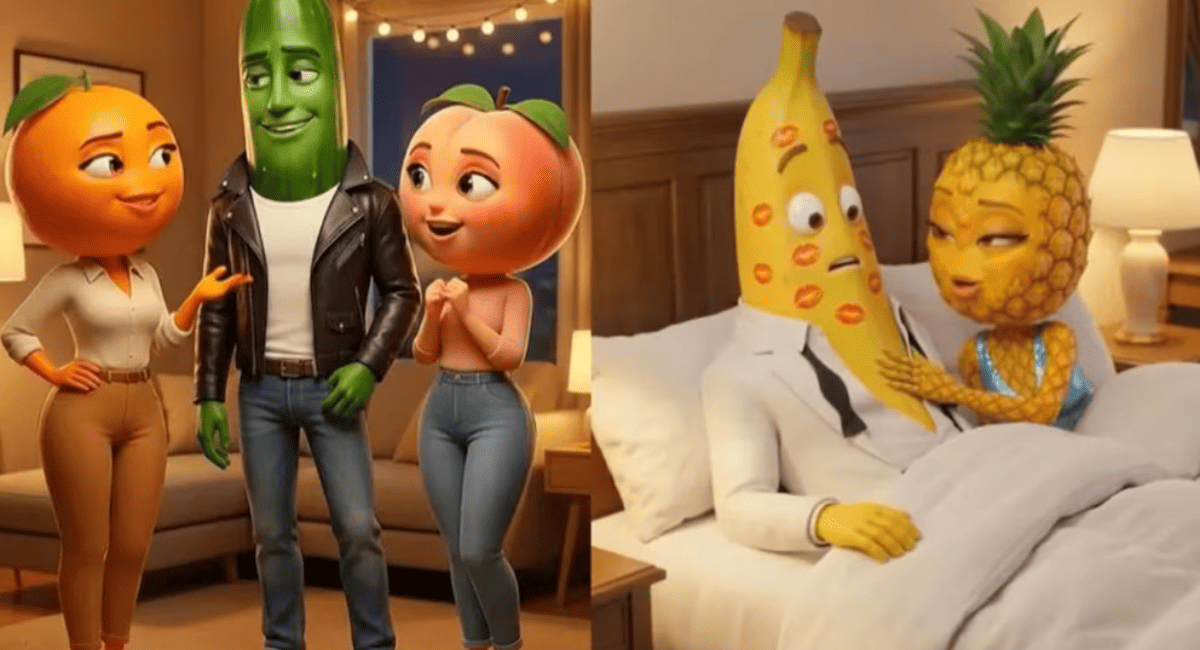
Enter the so-called fruit telenovelas—short-form stories starring humanized fruits, leaning hard into classic melodrama tropes. As bizarre as they sound, they’ve become one of the most eye-catching trends in the current digital ecosystem. With episodes running one to two minutes, they blend AI tooling, telenovela-style storytelling, and platform-native pacing to drive serious engagement across TikTok and Instagram.
And the numbers are no joke. Across TikTok, Instagram, and YouTube, these clips are pulling in millions of views, fueled by a mix of absurd humor, over-the-top drama, and snackable storytelling.
But beyond the meme factor, there’s a bigger takeaway here for the industry: fruit novelas are essentially a live, always-on lab for new production and consumption dynamics. This isn’t a one-off trend—it’s the most accessible (and yes, most ridiculous) expression of a deeper tech shift that’s already reshaping the global content value chain.
The Compressed Pipeline
The current fruit telenovela production workflow runs on three core tech pillars: image-to-video tools and diffusion models that animate static characters; automated lip-sync tech that matches mouth movements to audio; and voice synthesis to generate original dialogue—no actors required.
What used to take a full crew can now be pulled off by a single creator with a phone and the right stack of AI tools.
And this kind of pipeline compression isn’t just a fruit novela thing. In the global microdrama space, full-stack production tools developed by players like Yuewen Group, Chinese Online, and ByteDance have cut the workflow from 11 manual steps down to just three, making it possible for non-professional teams to produce content at scale.
This isn’t a passing phase—it’s structural. If 2024–2025 was about AI as a support layer (think dubbing, subtitling, localization), 2026 is shaping up as the inflection point for fully AI-assisted production.
For the traditional audiovisual business, this is more than a curiosity. According to Morgan Stanley estimates, generative AI could cut costs by around 10% across the media industry—and up to 30% in film and TV. That efficiency gap is no longer theoretical.
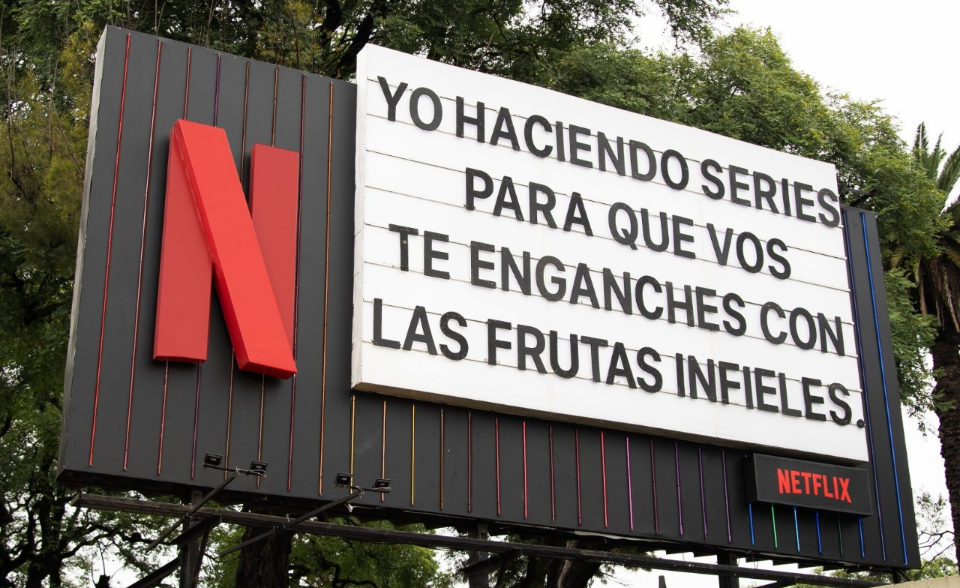
The Algorithm as Commissioning Editor
One of the deepest shifts fruit telenovelas put on display is epistemological: content is no longer validated before launch, but in real time—through views, retention curves, and comments. In this model, the algorithm partially replaces the traditional commissioning editor, effectively deciding which stories move forward and which ones get killed.
McKinsey has flagged this dynamic as one of the most disruptive scenarios in AI’s impact on entertainment: the potential for a “fundamental reset of the video production landscape,” reshaping the economics of content—including user-generated fare.
Demand for video has never been higher—the average adult in the US now spends close to seven hours a day consuming video across platforms, while premium production budgets remain flat and audience attention keeps fragmenting.
In that context, the constant-iteration model behind fruit telenovelas isn’t an outlier—it’s a logical response to how the digital ecosystem actually works.
What the Industry is Already Learning
The phenomenon hasn’t gone unnoticed by more established players. In Latin America, vertical video platform Shorta has just launched in the region, backed by Birdman co-writer Armando Bo, tech investor Ariel Arrieta, and streaming entrepreneur Tomás Escobar, with plans to roll out more than 500 original titles by 2027.
Unlike early microdrama entrants, Shorta is leaning into established industry credentials as a play for legitimacy.
And this isn’t just a Latin American trend. Spanish public broadcaster RTVE has already produced its first microdrama for Playz, Estúpido Cupido, and announced plans to turn the platform into a fully vertical video app “tailored to Gen Z viewing habits.”
At the same time, publisher Harlequin has teamed up with AI-native entertainment company Dashverse to co-produce 40 animated microdramas based on its romance catalog, while Germany’s Constantin Entertainment has entered the space with two series for US platform Crisp.
The global market is backing the momentum: the microdrama sector is projected to hit $26 billion in annual revenue by 2030, while in the US alone, in-app revenues from microdrama apps reached nearly $350 million in Q1 2025—up 20% quarter over quarter.
The Limitations the Industry Can’t Ignore
That said, the trend comes with clear friction points. Technical and storytelling quality is often low, saturation kicks in fast, and monetization models remain shaky for individual creators—unlike the platforms distributing the content. Analysts have also flagged concerns around the amplification of stereotypes and problematic dynamics, driven by massive, lightly moderated consumption.
All of this reinforces a key distinction: fruit telenovelas, at least for now, are not competing with premium content. Their value isn’t in replacing TV or streaming, but in exposing new ways of creating and distributing audiovisual content.
Part of their appeal comes down to what’s often called “cognitive dissonance”: the sheer absurdity of watching a piece of fruit carry a high-stakes melodrama is oddly compelling. But that same hook is also their ceiling—they’re built for instant impact, not for long-term world-building.
The Signal that Matters
At its core, the phenomenon draws a line the industry shouldn’t ignore: fruit novelas may not represent the future of content itself—but they might very well point to the future of how content is developed, tested, and evolved.
The generative image and video space is highly fragmented. Industry reports suggest enterprise-level productions are already using a median of 14 different models, with no slowdown in the pace of new releases. In that fast-moving tech stack, the barrier to experimenting with storytelling keeps dropping quarter by quarter.
So the real question isn’t whether this kind of content is sustainable long term. It’s which parts of its logic—real-time validation, constant iteration, low-cost production as a creative testing tool—will be absorbed, deliberately or not, by the global audiovisual industry.
Fruit novelas are just the most visible symptom. The underlying shift runs deeper—and it’s already underway.